

Judicial impartiality cannot exist when a judge rules on their own bias
This article was originally published on Substack and is part of an ongoing series examining how civil systems escalate harm through process and institutional design.

Photo by Tingey Injury Law Firm on Unsplash
What happens when the person accused of bias is the one deciding whether bias exists?
Judicial impartiality is one of the most fundamental principles of any effective legal system. Courts are expected to serve as neutral forums where disputes are resolved fairly, based on law and evidence, rather than personal interests, biases, or institutional protection.
However, in practice, this principle is often challenged in ways that raise serious concerns.
In many jurisdictions, when a litigant files a motion to disqualify a judge due to bias or prejudice, the judge in question is allowed to make the initial decision regarding that motion.
On the surface, this creates a clear contradiction.
The Structural Problem
A motion to disqualify a judge is not a routine procedure; it is a direct challenge to the judge’s fairness and neutrality in overseeing a case. This motion raises concerns about whether the judge can continue to make impartial decisions.
Typically, the process begins with the same judge reviewing the motion and deciding whether they should remain on the case.
This situation creates a structural imbalance that cannot be overlooked.
No other system based on fairness would permit an individual to serve as both the subject of a claim and the decision-maker concerning that claim without an independent review.
Yet, in courtrooms across the country, that is precisely what occurs.
The Appearance of Bias Matters
The legal standard involves not only the presence of bias but also its appearance. This distinction is crucial.
Public confidence in the judicial system relies on both actual fairness and the perception of fairness. If litigants believe that outcomes are predetermined or that judges are not held accountable, trust in the system diminishes.
When a judge rules on their own disqualification, even if they believe their decision is fair, the process itself can weaken confidence in the outcome.
The key question remains: Was the decision truly neutral, or was it influenced, even subconsciously, by self-interest?
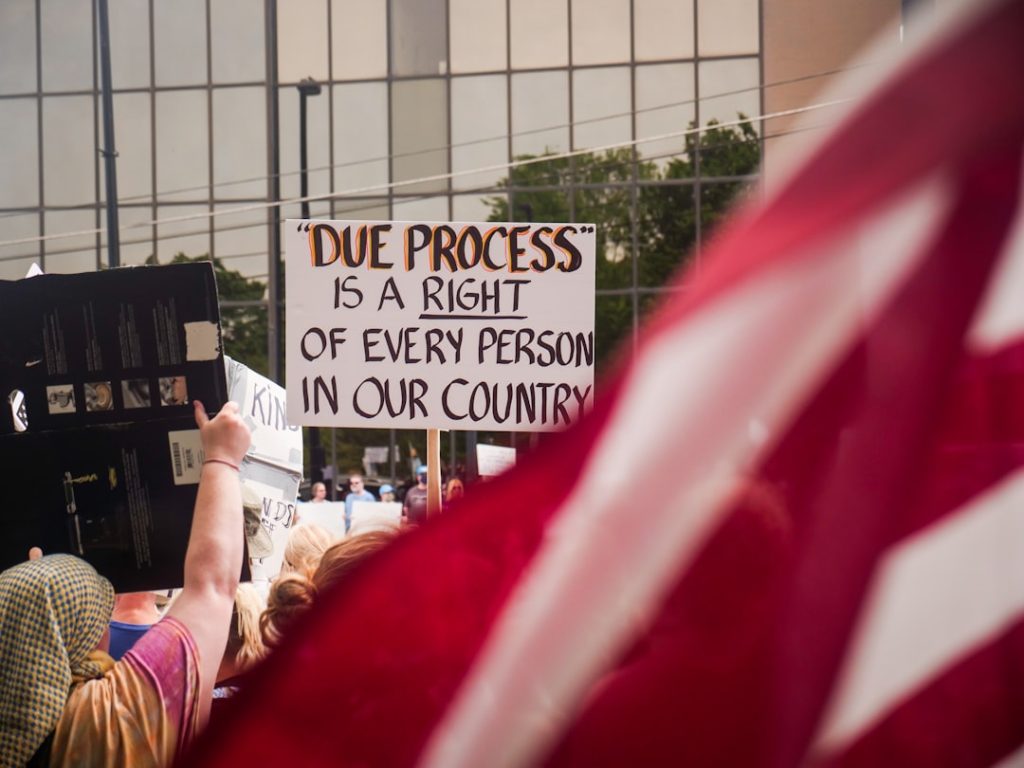
Due Process Concerns
Due process mandates that a decision-maker must be fair and impartial.
This principle is not merely theoretical; it is fundamental to justice.
When a judge assesses their own potential bias, it creates valid due process concerns, especially for self-represented litigants who often face significant challenges in navigating the legal system.
Without an independent review, the process can become circular:
- A litigant raises concerns about fairness.
- The judge who is being challenged reviews those concerns.
- The same judge decides whether the concerns are valid.
While this procedure may adhere to current rules, the underlying structure remains deeply problematic.
Why Independent Review Matters
The solution is straightforward.
Disqualification motions should be reviewed by an independent judge or assigned through a neutral process that eliminates any appearance of self-interest.
This approach is not about assuming bad intentions; it is about preserving the integrity of the system.
Even the most well-intentioned judge cannot be expected to completely separate themselves from a decision that questions their own conduct.
An independent review protects:

Photo by Giammarco Boscaro on Unsplash
A System That Protects Itself
The current structure highlights a significant problem within institutional systems: the tendency to self-regulate in ways that prioritize stability over accountability.
Courts are not immune to this issue.
When procedures allow decision-makers to assess challenges to their own authority, the system risks reinforcing itself instead of critically evaluating its practices.
This distinction is particularly important for individuals navigating the system, especially those without legal representation.
Final Thought
Judicial impartiality cannot exist solely in theory; it must be evident in practice.
Fairness is not just about the outcome but also about how that outcome is achieved.
When the process raises questions, those questions deserve more than internal review.
They require independent examination.
Because justice is not defined by what a system claims, but by what it is willing to examine.
—
Jennifer L. Dayton
Founder & Executive Director
Kalamazoo Justice Project, Inc.
This essay continues an ongoing series examining how civil systems escalate harm through process, institutional design, and administrative enforcement. Documentation is not justice, but without documentation, accountability becomes even harder to pursue.
Legal Framework and Resources
In Michigan, judicial disqualification is governed by court rules that specify when a judge must be removed from a case due to bias, conflicts of interest, or the appearance of impropriety.
According to Michigan Court Rule 2.003, a judge must disqualify themselves if their impartiality could reasonably be questioned. The process often begins with the judge reviewing the motion themselves before potentially passing it on to another judge for further consideration.
This structure raises important questions about fairness, especially in cases where litigants are navigating the system without legal representation.
Judicial disqualification procedures vary by state, but many follow a similar structure in which the challenged judge initially reviews the motion.
In federal courts, disqualification is governed by 28 U.S.C. § 455, which requires judges to recuse themselves in cases where their impartiality might reasonably be questioned.
While the standards are clearly defined, the application and process can differ significantly by jurisdiction.
Additional Resources
- Michigan Court Rule 2.003 (Judicial Disqualification)
- 28 U.S.C. § 455 (Federal Judicial Disqualification)
- State court websites for local rules and procedures
For those navigating the court system without legal representation, reviewing these rules can provide important context for understanding how disqualification motions are handled.
Understanding the rule is one thing. Navigating how it is applied in real courtrooms is another.
Originally published on Substack.
Read more: https://jenniferldayton.substack.com
 English